Turn catering enquiries into organised online orders
Postree Blog · Catering · September 2026
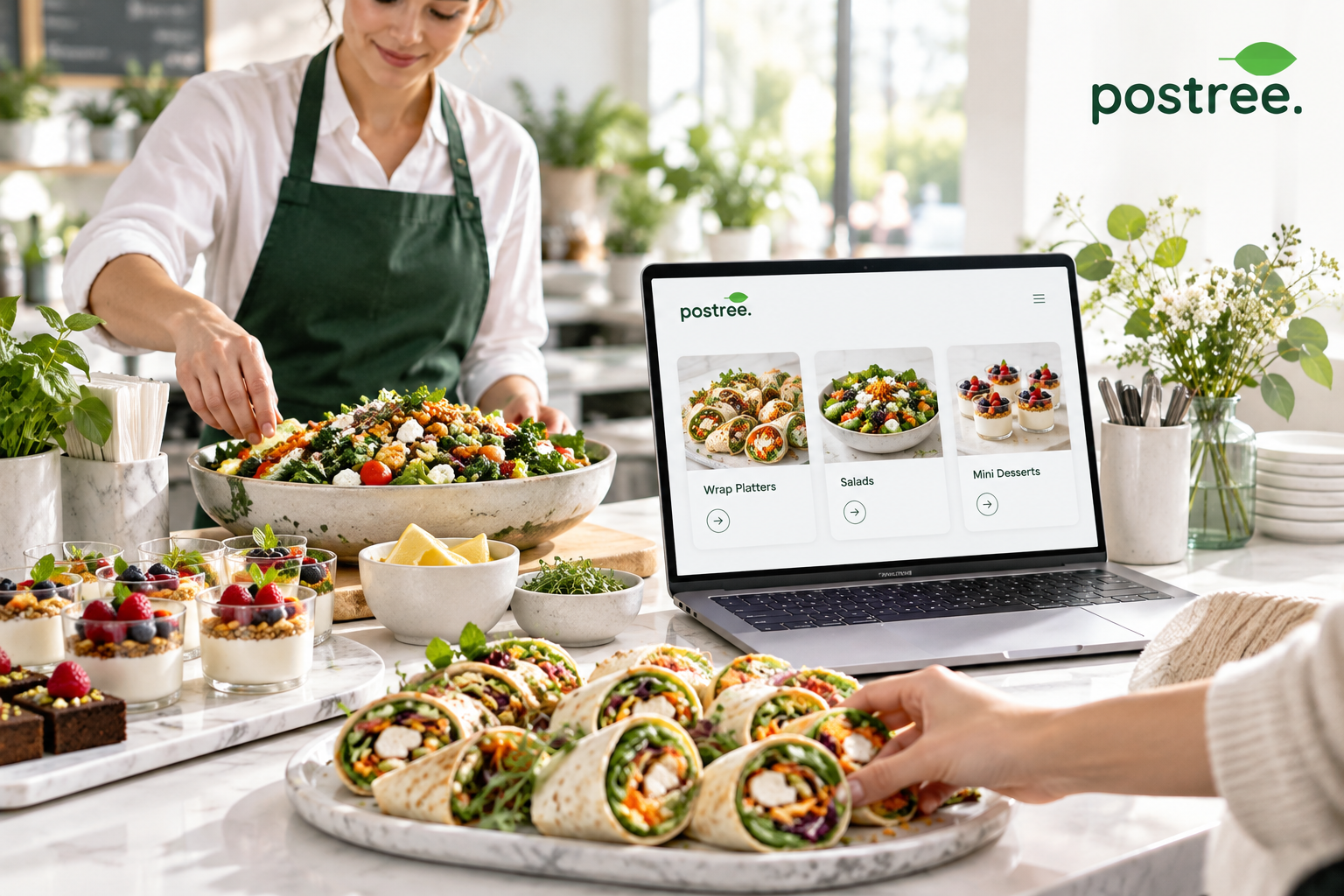
Catering enquiries often begin with several unanswered questions: how many people, which dishes, what time, collection or delivery, and whether serving equipment is needed. When those answers sit across emails, messages and handwritten notes, preparing the order becomes an administrative task as well as a kitchen job.
Postree Catering gives restaurants and hospitality businesses a dedicated online ordering route, with catering menus, date and time selection, lead-time controls and payment information in a shared workflow.
The use case: a café supplying office lunches
Imagine a café taking a regular lunch order for a nearby office while also serving its normal counter trade. A customer phones to change the date, emails dietary requests and sends a separate message about delivery. The manager then rewrites the details for the kitchen.
A structured catering order can bring the core information together earlier. The customer chooses a package or platter, selects collection or delivery, provides a date and time, adds instructions and completes the configured payment step.
The solution: design an order the kitchen can fulfil
Build a catering menu around the way the team actually prepares food. A twelve-person platter is different from twelve unrelated counter orders. Use clear portions, package descriptions and pricing so the customer understands what they are buying.
Set minimum notice periods that reflect shopping, preparation and staffing needs. A lead-time rule is useful because it prevents the business accepting work that cannot reasonably be completed, rather than leaving a manager to make that decision after payment.
Postree’s catering tools include deposit and balance management, with support for refundable equipment deposits in the checkout workflow. Confirm which payment arrangement applies to each offer and make it clear before the customer places the order.
Where the efficiency comes from
The main opportunity is fewer missing details and less repeated communication. An upcoming-order view helps the manager see what is approaching, while order summaries and preparation sheets give the kitchen a consistent reference.
Restaurants can apply the same approach to family celebrations or private functions. Bakeries can structure party selections, and hotel teams can use catering workflows alongside wider food and beverage operations where the setup supports their needs.
Online ordering does not eliminate conversations about unusual events. It gives straightforward orders a repeatable route and makes it easier to identify the enquiries that do need personal planning.
Start with a manageable menu
Launch with the packages your team can price, prepare and deliver consistently. Test a collection order, a delivery request and an order involving equipment. Review who checks special instructions and who confirms readiness.
Measure the number of follow-up contacts per order, time spent preparing kitchen instructions and on-time handovers. Review catering revenue separately from counter sales so you can see whether the extra work is worthwhile.
Ask Postree to build a demonstration around one of your real catering packages and its preparation timetable.