QR table ordering that works alongside your team
Postree Blog · Table Ordering · September 2026
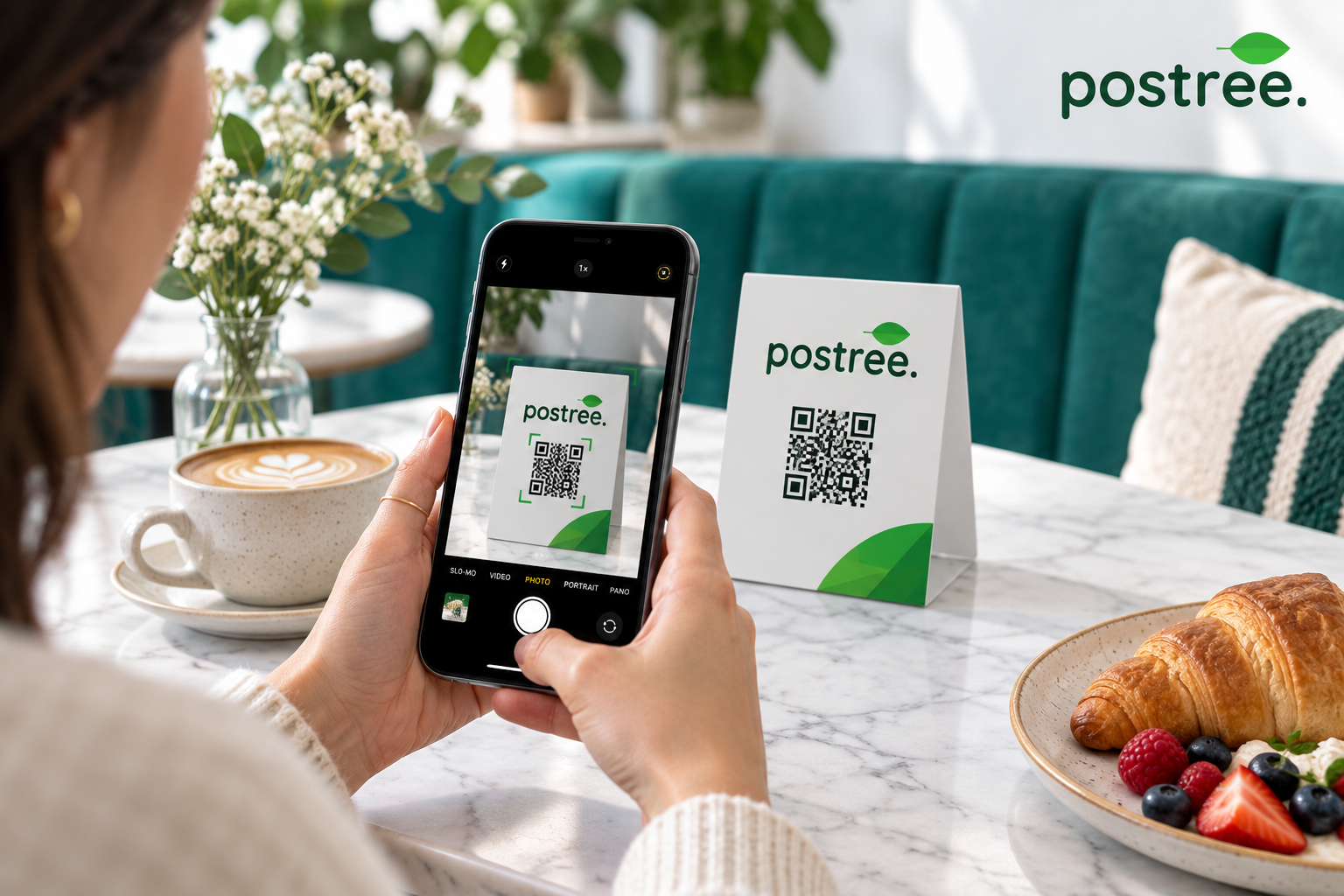
QR ordering works best when it supports the service a venue wants to offer. A café terrace may benefit from guests placing another coffee order themselves. A full-service dining room may prefer a digital menu while staff continue taking orders personally.
Postree Table Ordering supports both approaches: digital menu browsing and full guest ordering with payment. This gives venues a way to introduce self-service where it is useful, without assuming every table needs the same experience.
The use case: a café with a busy lunch queue
Consider a café where counter customers and seated guests share one queue. A guest who wants another drink must leave the table, join the line and wait to pay. Meanwhile, the counter team is also handling takeaway orders.
With full table ordering, the guest scans the table’s QR code, browses the menu, builds a basket and pays from their phone. The order enters the connected POS and kitchen workflow. Staff can then focus on preparing and delivering it, while remaining available to answer questions.
The solution: choose the right mode
Digital menu mode is a useful starting point when you want a clear, accessible menu but wish to keep order-taking with staff. Full ordering mode adds the ability for guests to submit and pay for orders themselves.
Before launch, check how tables are identified in your configuration. Test the journey from a real table, including the basket review and payment step. Make sure staff can recognise a table order and know where to deliver it.
The experience works through a mobile browser, so guests do not need to download an app. Clear instructions on the table should explain what scanning the code allows them to do. Keep a staff-assisted option available for anyone who prefers it or cannot use a phone.
Where the efficiency comes from
Guests can review quantities before submitting, which can reduce some verbal handover errors. Reorders do not always need a separate visit to the counter, and payment can form part of the order journey rather than another queue at the end.
These benefits depend on the service around the technology. A fast digital ordering step will not solve unclear table numbers or an overloaded preparation station. Start with a manageable area and watch how orders move through the venue.
Other places it can fit
Bars with seated service, hotel lounges and casual restaurants can use QR ordering for areas where guests want flexibility. A venue can also use menu-only browsing in one setting and a fuller self-service approach elsewhere, subject to its configured setup.
Track order corrections, requests for help, time from order to delivery and guest feedback. Compare order values carefully without assuming the system guarantees higher spending.
Ask Postree to show both modes so you can choose the right balance between guest independence and personal service.